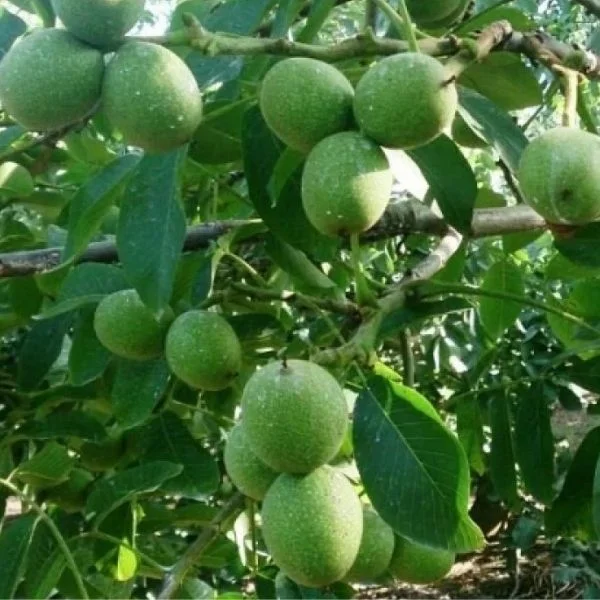
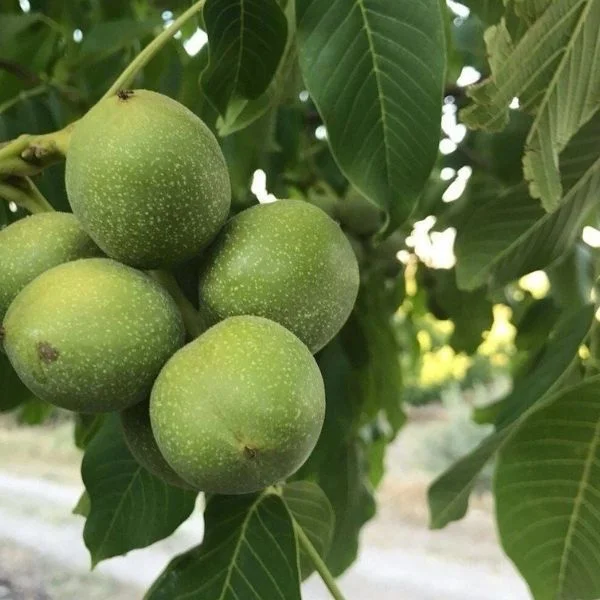
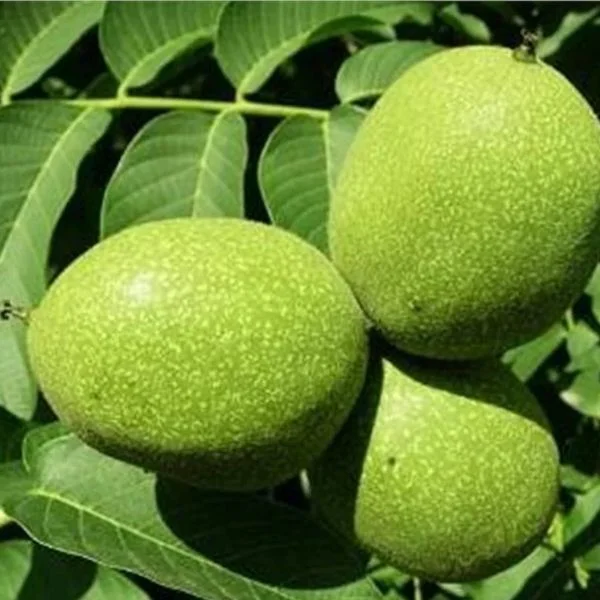
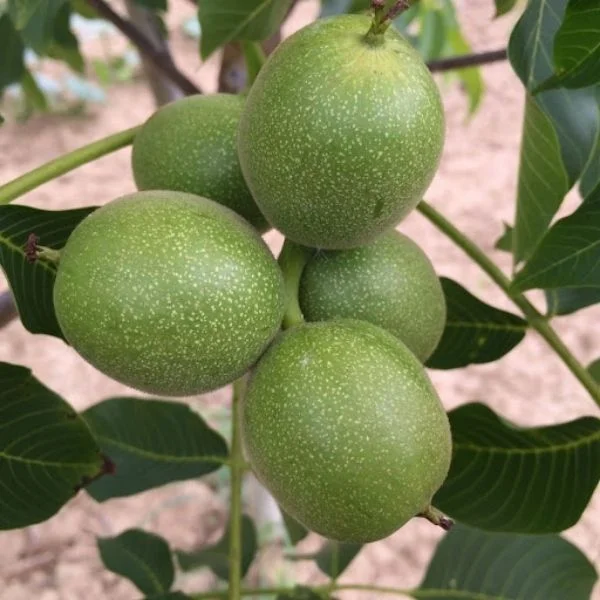
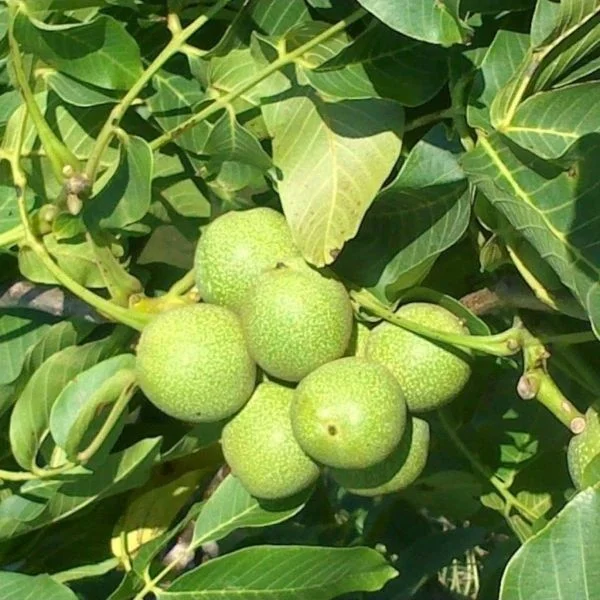
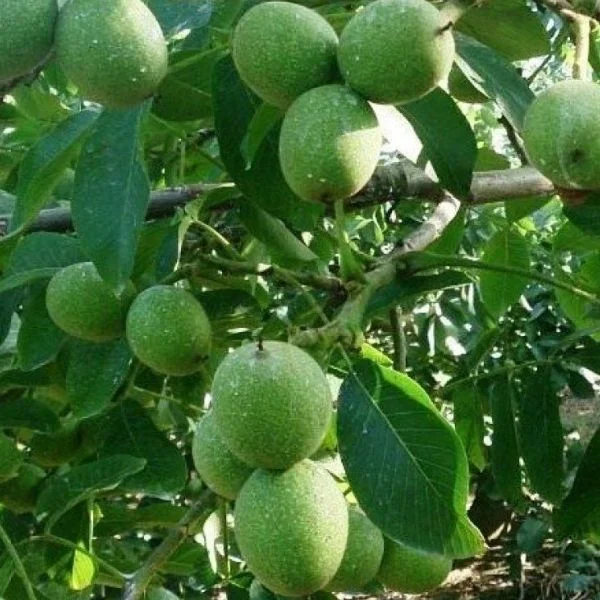
The Howard walnut sapling is a modern walnut variety widely used in commercial walnut production, particularly by growers aiming for high yield and quality kernels. Originating from the United States, Howard has gained recognition for its balanced growth habit and market-oriented nut characteristics.
Thanks to its strong lateral bearing capacity, the Howard walnut sapling offers consistent productivity when planted in suitable regions and managed properly.
General Characteristics of Howard Walnut Saplings
Howard walnut saplings exhibit a semi-upright growth habit with a well-structured canopy. This growth form allows better light penetration within the orchard and facilitates pruning and maintenance practices.
The nuts are medium to large in size, with relatively thin shells and light-colored kernels. Kernel percentage is considered commercially acceptable, making Howard suitable for both in-shell and kernel markets.
Climate and Regional Adaptation
Howard walnut saplings perform best in temperate and semi-continental climates. While it does not leaf out as late as Chandler, it is generally more balanced than early-leafing varieties in terms of frost sensitivity.
In regions with frequent late spring frosts, careful site selection and orchard planning are recommended.
Soil Requirements
Howard walnut saplings prefer deep, well-drained soils rich in organic matter. Poor drainage or heavy clay soils can restrict root development and negatively impact tree performance.
Soil analysis prior to planting is strongly recommended for optimal orchard establishment.
Should Howard Walnut Saplings Be Grafted?
For commercial walnut orchards, grafted Howard walnut saplings are recommended. Grafted saplings ensure genetic uniformity, earlier fruiting, and predictable orchard performance.
Ungrafted, seed-grown saplings may show variability and are generally not suitable for professional production.
Who Is It Suitable For?
•Commercial walnut growers
•Producers targeting high-quality kernel production
•Growers operating in temperate or semi-continental regions
Frequently Asked Questions
How long does it take for Howard walnut saplings to bear fruit?
Under proper growing conditions, grafted Howard walnut saplings begin bearing fruit within a reasonable time frame.
Can Howard walnut saplings be grown in all regions?
No. Regional climate conditions and frost risk should always be evaluated before planting.
The Howard walnut sapling stands out for its balanced growth, reliable yield, and quality nut characteristics. When planted in suitable regions and managed effectively, it provides consistent and long-term walnut production.